


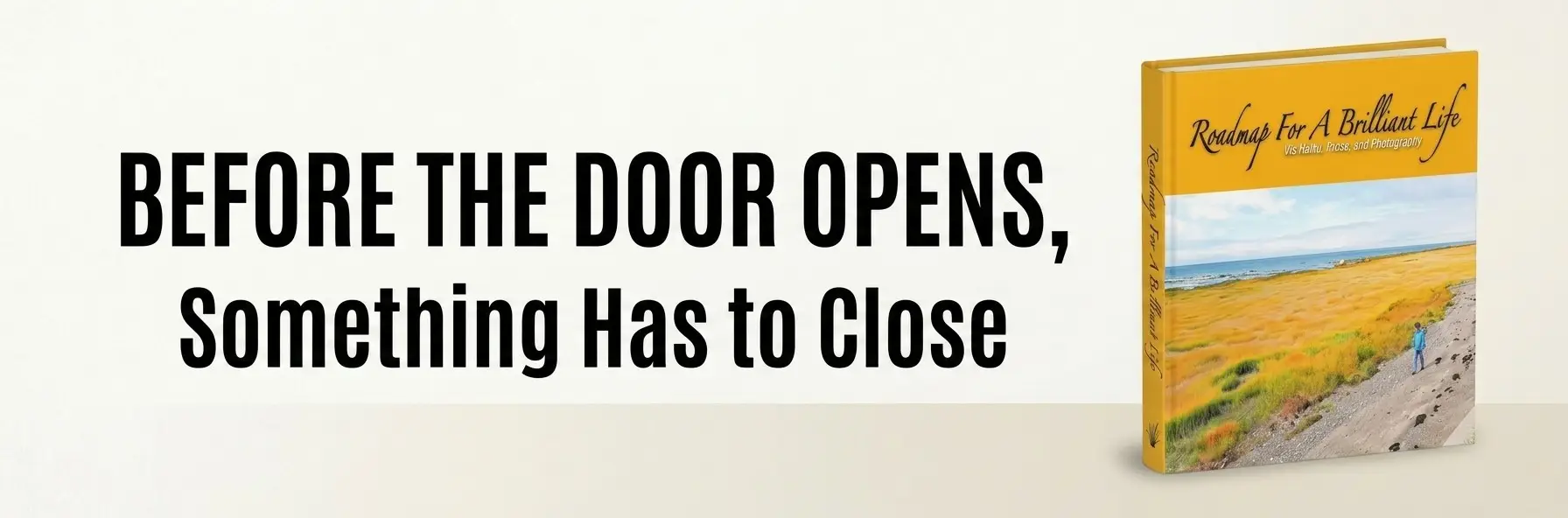
New beginnings are often described as bright, hopeful, and exciting. We picture fresh starts, open doors, clean pages, and new possibilities. But the truth is more complicated. Every real beginning carries an ending inside it. Before a new life can take shape, something old must be acknowledged, released, or transformed.
This is one of the central insights in Roadmap For A Brilliant Life. Change is not only about stepping into what comes next. It is also about understanding what has ended and why it matters. A person may begin a new job, relationship, home, phase of life, or spiritual chapter, but if they have not honored what came before, the new beginning may feel strangely incomplete.
We often want renewal without grief. We want the future without the discomfort of releasing the past. Yet life rarely works that way. To begin well, we must first learn how to end well.
Why Endings Are Part of Every Beginning
An ending does not always look dramatic. Sometimes it is obvious, such as a death, divorce, retirement, move, or career change. Other times, it is quieter. A role no longer fits. A dream loses its power. A friendship shifts. A former ambition feels empty. A younger version of the self begins to fade.
These endings can be easy to overlook because the outer life may continue. You may still go to work, answer messages, care for others, and maintain routines. But inwardly, something has changed. What once gave structure or meaning may no longer do so in the same way.
A new beginning becomes possible only when we recognize this change honestly. Without that recognition, we may try to build the future on top of unresolved loss. The result is a life that appears to move forward while remaining emotionally tied to what has passed.
The Mistake of Rushing Past Loss
Modern culture is uncomfortable with endings. It prefers action, solutions, and optimism. When someone is grieving a loss or facing a transition, people may encourage them to move on quickly. They may say there is a silver lining, a better opportunity ahead, or a reason everything happened. While these responses may be well-meaning, they can prevent people from doing the necessary emotional work of transition.
Rushing past loss does not make it disappear. It often causes the loss to travel with us. We may compare every new situation to the old one. We may resist opportunities because we are still loyal to what is gone. We may enter a new chapter carrying resentment, nostalgia, or fear that belongs to the previous one.
Roadmap For A Brilliant Life encourages a more conscious approach. It invites us to honor endings rather than deny them. To ask what mattered, what hurt, what must be grieved, and what can now be released.
Grief Makes Room for Renewal
Grief is not the enemy of new beginnings. In many cases, grief is what makes new beginnings possible. When we allow ourselves to feel the weight of an ending, we begin to loosen our grip on it. We stop pretending that nothing changed. We allow the past to take its rightful place in our story.
This does not mean forgetting. It does not mean minimizing what mattered. It means integrating the loss so it does not secretly govern the future.
A person who grieves a former career can eventually discover a new purpose without constantly comparing it to what came before. A person who grieves a relationship can eventually enter new connections with more clarity. A person who grieves youth can eventually receive the gifts of age. In each case, grief creates space for a different kind of life.
Why Identity Must Shift Before Life Can Shift
Endings are difficult because they often involve identity. We do not only lose circumstances; we lose versions of ourselves. The professional loses the title that once defined them. The parent watches children become independent and wonders who they are now. The athlete, traveler, caretaker, leader, or achiever may find that a former identity no longer fits.
This is why new beginnings can feel unsettling even when they are positive. They ask us to become someone we have not fully met yet.
The manuscript’s broader message is that life unfolds in stages. Each stage carries its own tasks, and each transition asks us to release something that belonged to the previous chapter. If we cling too tightly to the old identity, we cannot fully inhabit the new one.
Conclusion
Every new beginning starts with something ending because life is not built in separate chapters. Each phase grows out of the one before it. To begin well, we must first acknowledge what has closed, what has changed, and what must be released.
Roadmap For A Brilliant Life reminds us that endings are not failures. They are thresholds. They ask us to grieve, reflect, and loosen our grip on identities that no longer fit. They prepare us for renewal by making space inside us.
If you are standing at the edge of a new beginning, do not rush past the ending that made it necessary. Name it. Honor it. Learn from it. Release what cannot come forward.
Only then can the next door open fully. And when it does, you will not simply be starting over. You will be beginning again with greater wisdom, clarity, and truth.