


Rushing can become so normal that we stop recognizing it as a problem. We rush through mornings, meals, conversations, work, errands, decisions, and even rest. We move quickly not always because life demands it, but because speed has become a habit. The body hurries, the mind jumps ahead, and the present moment becomes something to get through rather than something to live.
At first, rushing may feel productive. It gives the impression of control, purpose, and importance. But over time, it can leave us disconnected from ourselves and from the people and beauty around us. We may accomplish more while experiencing less. We may stay busy while feeling strangely empty.
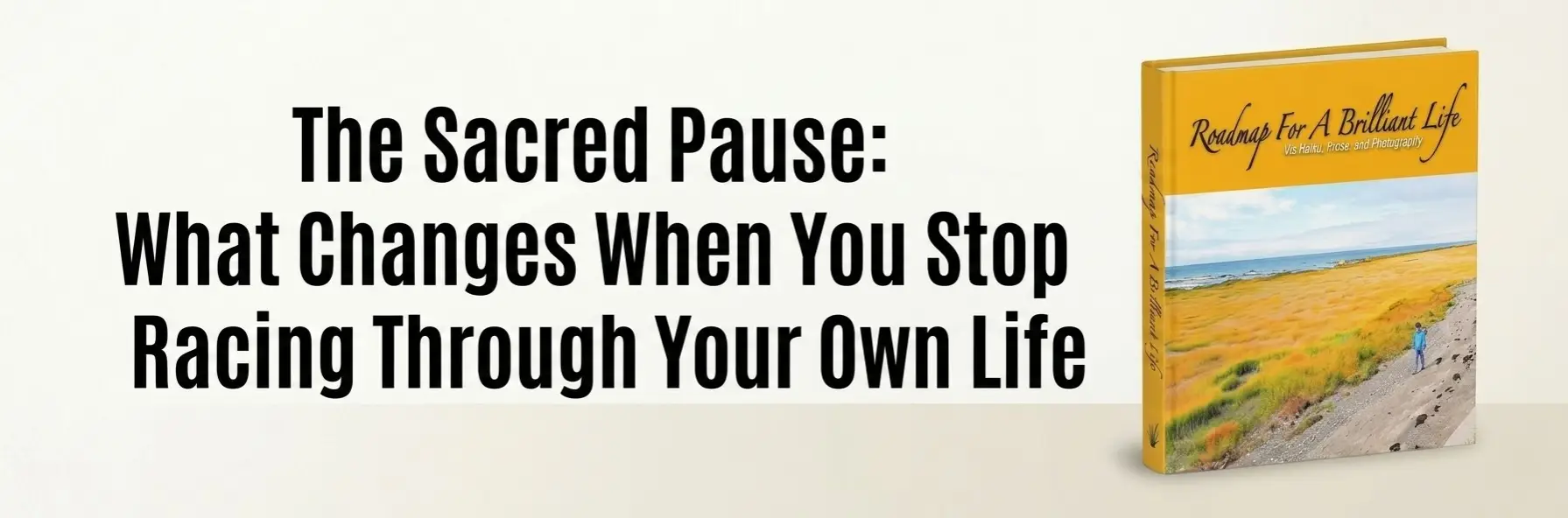
Roadmap For A Brilliant Life invites readers into a different rhythm. Through poetry, reflection, and images, it reminds us that a brilliant life is not created only by reaching goals. It is also created by noticing where we are, who we are with, what we feel, and what is quietly asking for our attention. When we stop rushing, we do not fall behind life. We finally begin to enter it.
Why We Rush Even When We Don’t Have To
Rushing is not always about time. Often, it is about anxiety. We rush because we feel there is never enough: not enough time, success, energy, security, approval, or certainty. The mind races ahead, trying to manage outcomes before they arrive. The body follows, tightening around urgency.
Rushing can also be learned. Many people grow up in environments where productivity is praised and stillness is treated as laziness. They learn to equate speed with worth. If they are not doing, fixing, producing, or planning, they feel guilty.
But constant rushing comes at a cost. It makes the nervous system live as if every moment is an emergency. It reduces our ability to listen, reflect, savor, and respond wisely. Most importantly, it trains us to believe that life is always somewhere ahead, never here.
The Difference Between Moving and Being Driven
There is nothing wrong with movement. Life requires action. We work, care, build, serve, and make decisions. The problem is not movement itself, but being driven by unconscious urgency.
Intentional movement feels different from rushing. It has direction, but not panic. It allows space for attention. It can be purposeful without being frantic. Rushing, by contrast, often carries a sense of inner pressure that says, “Hurry, or something will be lost.”
Roadmap For A Brilliant Life encourages a more conscious way of moving through life. It asks us to notice what we are noticing. That kind of awareness is almost impossible when we are racing. To live more fully, we must learn when to move and when to pause.
What Rushing Steals From You
Rushing steals more than time. It steals experience. When you rush, you may complete the walk but miss the sky. You may finish the meal but miss the taste. You may answer the question but miss the person asking it. You may get through the day but barely inhabit it.
Over time, rushing can dull joy. It makes small pleasures feel like interruptions rather than nourishment. It can also weaken relationships because real connection requires presence. People can sense when our bodies are in the room but our attention has already left.
Rushing also steals self-knowledge. The inner voice is rarely loud. It speaks through subtle signals: fatigue, longing, resistance, curiosity, peace, or discomfort. If we never slow down, we may miss the very information that could guide us toward a more authentic life.
Presence Is Not Wasted Time
Many people resist slowing down because they fear losing momentum. They worry that pausing will make them less productive, less useful, or less in control. But presence is not wasted time. It is the foundation for wiser living.
When we are present, we see more clearly. We notice whether a decision is aligned or reactive. We hear what someone is actually saying. We feel what the body has been trying to tell us. We recognize beauty that would otherwise pass unnoticed.
Presence does not mean doing nothing forever. It means becoming available to the moment before deciding how to act. In this way, slowing down can actually make action more meaningful.
Conclusion
When you finally stop rushing, life may not become easier overnight. The calendar may still be full. Responsibilities may remain. Uncertainty may still exist. But your relationship to life can begin to change.
You may discover that the present moment contains more than you thought: beauty, guidance, grief, comfort, truth, connection, and small openings toward renewal. You may realize that slowing down does not mean falling behind. It means arriving.
Roadmap For A Brilliant Life reminds us that a meaningful life is not only measured by distance traveled or goals achieved. It is measured by how consciously we inhabit the path. If you are always rushing toward the next moment, you may miss the one that is trying to bless you now.
So pause. Breathe. Look around. Listen. Let this moment become real before it disappears into memory. The life you are racing toward may be waiting inside the life you are rushing through.