


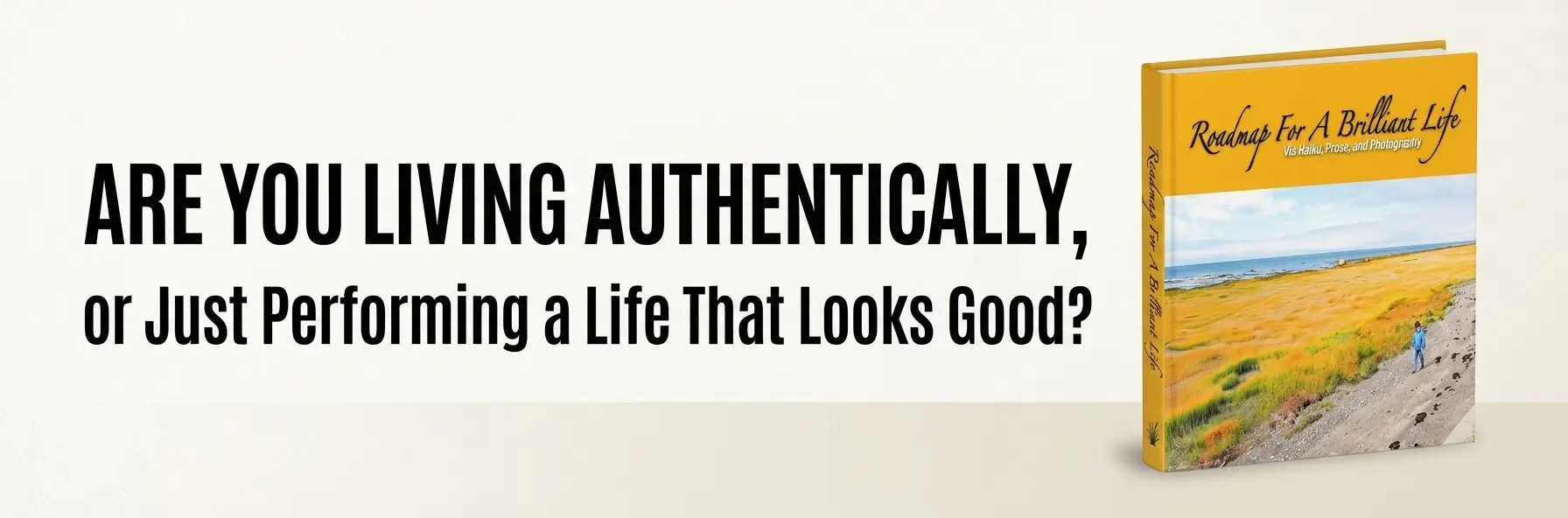
At first glance, a good life can look remarkably convincing. It may include a respected career, a polished home, a busy calendar, financial stability, social approval, and the appearance of confidence. From the outside, everything seems intact. Yet many people quietly sense a gap between the life they display and the life they actually feel. They are functioning, achieving, and being admired, but somewhere beneath the surface, they are not fully present in their own existence.
This is one of the central questions raised by Roadmap For A Brilliant Life: are we living authentically, or are we simply performing a life that looks acceptable to others? The difference matters because an impressive life is not always a true one. A life can look successful and still feel hollow. It can meet every external expectation and still fail to nourish the soul.
Authentic living is not about rejecting responsibility or chasing constant happiness. It is about alignment. It is the ongoing practice of bringing your choices, values, relationships, and daily actions closer to who you truly are. Your achievement and external life are also important but now are aligned so you feel whole and unshakable.
The Difference Between Looking Good and Living Truthfully
External success and inner fulfillment are not opposites. However,our culture teaches us to measure life primarily through visible milestones: degrees, promotions, titles, houses, relationships, achievements, and public recognition. These things are not inherently wrong; they are just overdone, blocking self awareness, .
A performed life is often built around approval. It asks, “How does this look?” rather than “Is this true?” It is shaped by comparison, obligation, fear, and habit. Over time, a person may become highly skilled at meeting expectations while losing touch with their own deeper desires.
A brilliant life asks different questions. What gives me energy? What drains me? What values do I want my life to express? Where am I pretending? What am I still carrying because others expect me to? These questions may be uncomfortable, but they are also clarifying. They help expose the difference between a life arranged for appearance and a life built from within.
Why We Learn to Perform Instead of Live
Most people do not begin life intending to perform. They learn it gradually. As children, students, employees, partners, parents, or professionals, we receive signals about what earns approval and what causes disappointment. We notice which parts of ourselves are praised and which are ignored. We adapt.
Performance can become a survival strategy. It helps people belong, succeed, and avoid rejection. In moderation, adaptation is part of healthy social life. But when adaptation becomes self-abandonment, something essential is lost. A person may become so practiced at being acceptable that they forget how to be real.
This is why brilliance require awareness. We must notice the roles we are playing and ask whether they still serve us. Some roles are chosen with love. Others are inherited without question. Some once fit but have become too small. Authentic living does not require discarding every role. It requires telling the truth about which ones still reflect who we are becoming.
The “Gold-Plated Life” Problem
One of the most powerful ideas in Roadmap For A Brilliant Life is the contrast between a life that merely looks valuable and one that has real substance. A gold-plated life may shine on the outside, but its value is thin. It depends on surface, image, and approval. A more authentic life has deeper weight. It may be less glamorous, but it is more durable.
The gold-plated life often appears in subtle ways. You may say yes when your body and spirit are saying no. You may pursue goals that impress others but leave you empty. You may maintain relationships that require you to shrink. You may stay busy to avoid hearing the quieter voice within.
The danger is not simply unhappiness. The danger is distance from yourself. When you live too long by external signals, your inner compass weakens. You may no longer know what you want, what you believe, or what kind of life would actually feel meaningful.
Conclusion
Living brilliantly does not mean building a perfect life. It means building a truthful one. It means choosing substance over surface, alignment over approval, and inner clarity over constant performance. It means asking whether the life you are presenting is the life you are actually inhabiting.
Roadmap For A Brilliant Life invites readers to pause long enough to hear the quieter questions beneath ordinary busyness. Are you being guided by your values and choosing expectations from others you want to meet? Are you moving toward what gives life, or staying stuck in outdated roles? Are you becoming more yourself with time, or more practiced at pretending?
The good news is that authenticity does not require starting over completely. It begins with one honest observation, one truthful choice, one small act of alignment. Over time, those choices become a life. Not necessarily a flawless life, but a real one. And that is where brilliance begins.