


Not knowing what comes next can make even ordinary life feel unstable. You may be between jobs, recovering from loss, adjusting to retirement, facing a relationship change, entering a new season of aging, or simply sensing that the old direction no longer fits. The hardest part is not always the change itself. Often, it is the uncertainty that follows.
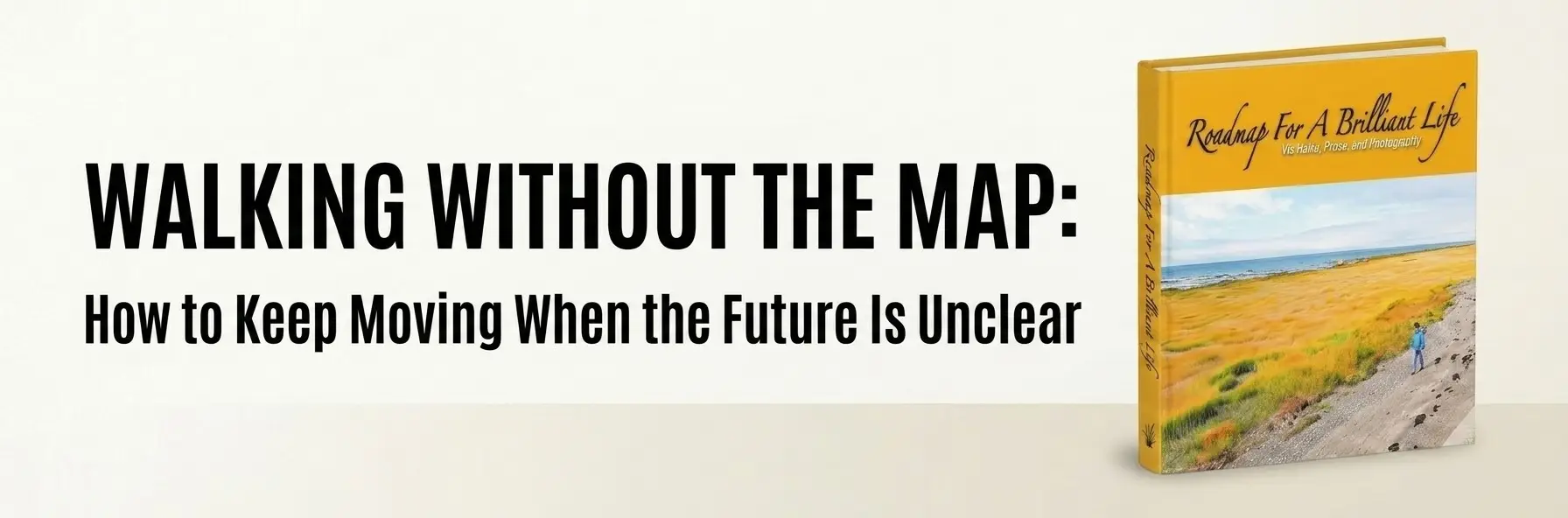
Most people want clarity before they move. They want the full plan, the guaranteed outcome, the visible road. But life rarely offers that kind of certainty at the exact moment we need reassurance. Roadmap For A Brilliant Life offers a wiser approach: when you do not know what is next, you do not have to force the whole future into view. You can begin by noticing where you are, what has ended, what still gives life, and what small step feels honest.
Moving forward does not always mean moving fast. Sometimes it means learning how to walk without the map.
Why Uncertainty Feels So Threatening
Uncertainty is uncomfortable because the mind is designed to seek patterns and predict outcomes. Familiar routines help us feel safe. Clear roles help us know who we are. When those structures shift, the nervous system can interpret the unknown as danger, even when the transition may eventually lead to growth.
This is why people often rush to make decisions when they feel uncertain. Any answer can feel better than no answer. A quick plan, a new commitment, or a familiar pattern may temporarily reduce anxiety. But rushed choices can also keep us from hearing what the transition is trying to teach.
Not knowing what comes next does not mean you are failing. It may mean you are in a necessary in-between stage. The old path has loosened, and the new one has not yet become visible. That space deserves patience, not panic.
Start by Naming What Has Ended
Before you can move forward wisely, it helps to understand what you are moving away from. Every uncertain season contains some kind of ending. It may be the end of a role, dream, relationship, routine, identity, belief, or stage of life.
Naming the ending brings clarity. Instead of saying, “I feel lost,” you might say, “I am grieving the end of a career identity,” or “I am adjusting to a quieter house,” or “I no longer feel connected to the goals that once motivated me.” Specific language helps transform vague anxiety into something you can actually work with.
In Roadmap For A Brilliant Life, endings are not treated as failures. They are treated as thresholds. When we acknowledge what has closed, we stop dragging it unconsciously into the future.
Listen for What Still Gives Life
In uncertain seasons, pay close attention to aliveness. What gives you energy, even briefly? What brings peace? What makes you curious? What feels honest, even if it is inconvenient? These signals can become guidance.
This does not mean every pleasant feeling should become a life plan. It means your inner responses contain information. If a certain kind of work, conversation, service, creativity, or environment consistently brings vitality, it deserves attention.
Notice What Drains You
Guidance also appears through depletion. What leaves you feeling false, resentful, numb, or diminished? These feelings may reveal patterns that cannot come with you into the next chapter.
Notice What Keeps Returning
A recurring desire, question, or idea may be important. If something continues to return across months or years, it may be asking for your attention. The future often whispers before it speaks clearly.
Take Small Experiments Instead of Giant Leaps
When you do not know what is next, you may feel pressure to make one dramatic decision. But growth often happens through small experiments. Try a class. Reconnect with someone. Volunteer. Begin a daily practice. Explore a new interest. Change one routine. Make one honest conversation possible.
Small experiments reduce fear because they do not require you to define your entire future. They allow you to gather information through experience. You learn what fits by trying, observing, and adjusting.
This approach is especially helpful during the Neutral Zone, the in-between phase where the old life has ended but the new one is not fully clear. Instead of forcing certainty, you create gentle movement.
Conclusion
Moving forward when you do not know what is next requires a different kind of courage. It is not the courage of perfect confidence. It is the courage of honest attention. It asks you to name what has ended, stop forcing premature certainty, anchor yourself in the present, listen for what gives life, and take small steps before the whole road is visible.
Roadmap For A Brilliant Life reminds us that life unfolds through stages, transitions, endings, uncertain middles, and new beginnings. The unclear season is not outside the journey. It is part of the journey.
If you do not know what comes next, do not assume you are lost forever. You may simply be between maps. Walk gently. Notice carefully. Ask for support. Take the next truthful step.
The future may not be fully visible yet, but that does not mean it is absent. It may already be forming quietly beneath your feet.