


Every stage of life comes with expectations. In youth, we are expected to learn, explore, and begin shaping an identity. In adulthood, we are expected to work, build, love, provide, and contribute. In later life, we are expected to slow down, reflect, and make peace with what has been. These expectations are familiar because society talks about them constantly.
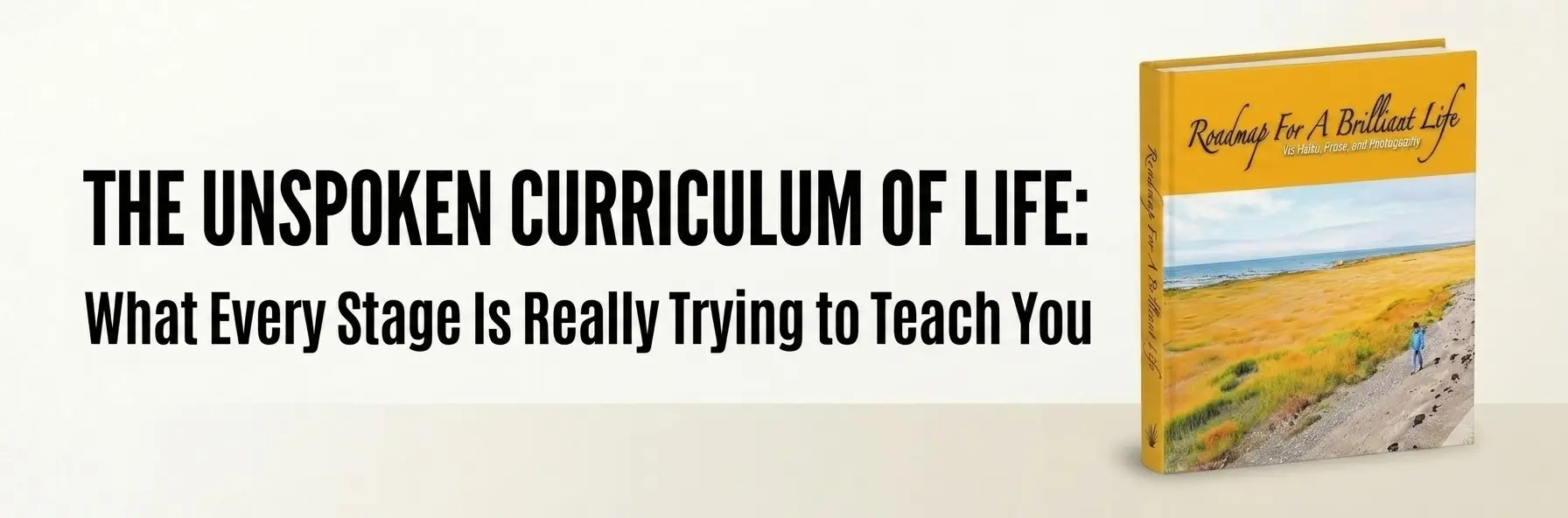
But beneath these visible milestones are hidden tasks no one talks about enough. These are the emotional, spiritual, and psychological assignments that determine whether we simply pass through life or actually grow through it. Roadmap For A Brilliant Life brings attention to this deeper curriculum. It suggests that life is not merely a sequence of events, but a series of developmental invitations. Each stage asks something different of us, and when we ignore those tasks, we carry unfinished work into the next chapter.
A fulfilled life is not built by rushing from one milestone to another. It is built by recognizing what each season is trying to teach.
Why Life Stages Are More Than Age Brackets
It is easy to think of life stages in terms of age: childhood, young adulthood, midlife, retirement, old age. But age alone does not define a stage. A life stage is also shaped by identity, responsibility, loss, relationships, purpose, and inner readiness. Two people may be the same age and be living different developmental realities.
One person at forty may be building a career and raising children. Another may be starting over after divorce, illness, or grief. One person at seventy may be withdrawing from life, while another may be entering a new season of creativity, service, or spiritual depth. The external number matters less than the inner work being asked of the person.
The hidden task is to notice where you actually are, not where you think you should be. When you stop comparing your timeline to someone else’s, you can begin to ask a more useful question: What is this stage asking me to learn now?
The Hidden Task of Youth: Becoming Without Pretending
Youth is often described as a time of freedom, energy, and possibility. That is true, but it is also a season of pressure. Young people are asked to choose paths before they fully know themselves. They are encouraged to perform confidently, chase achievement, and create identities that look impressive from the outside.
The hidden task of youth is not simply to succeed. It is to begin becoming without losing oneself in pretending. This means experimenting, making mistakes, forming values, testing courage, and learning the difference between approval and authenticity.
Youth asks: Who am I when I am not trying to be admired? What kind of life feels alive rather than merely acceptable? These questions may not be fully answered early, but asking them matters. They create the foundation for a life built from within instead of one shaped only by external expectations.
The Hidden Task of Adulthood: Building Without Burying the Soul
Adulthood often brings responsibility. Careers, partnerships, care giving, finances, homes, communities, and family systems may demand enormous energy. This stage can be deeply meaningful, but it can also be consuming. People may become so focused on building a life that they stop inhabiting it.
The hidden task of adulthood is to build without burying the soul. It is to remain connected to meaning while meeting obligations. It is to ask whether ambition is serving one’s values or replacing them. It is to create stability without becoming trapped by the structures created.
This is difficult because adulthood demands and rewards productivity. The person who keeps going, keeps achieving, and keeps holding everything together may receive praise while quietly losing touch with joy. In this stage, the inner work is to stay conscious. To ask: What am I building, and why? Who am I becoming through my responsibilities? Where do I need more honesty, rest, beauty, or connection?
THE HIDDEN TASK OF ELDERHOOD
There are new realities as we age: body, interests, authentic spirituality, creativity and contribution that looks different form the middle years. One of the greatest difficulties in Chapters 3 and 4 of life is to understand what you have swallowed about who you will be in these stages. Out of awareness, many start acting infirm because media, family, friends start treating us that way. People are living longer and need new images and possibilities of aging. There is so much more to learn and skills to be developed so that your great passion meets the world’s great need.
How to Recognize the Task of Your Current Stage
You can begin by paying attention to recurring themes. What question keeps returning? What emotion keeps surfacing? What no longer fits, even if it once did? What desire feels persistent but inconvenient? What loss still needs to be honored?
Notice Your Resistance
Resistance often points toward the work of the stage. If you resist rest, the task may involve surrender. If you resist change, the task may involve trust. If you resist grief, the task may involve letting go. If you resist joy, the task may involve receiving life more fully.
Conclusion
The hidden tasks of each life stage are not obstacles to a brilliant life. They are the path to one. They teach us to become with less pretending, to build while listening to the soul, to loosen identities that no longer fit, and to turn experience into wisdom.
Roadmap For A Brilliant Life reminds us that life is not a straight line of achievements. It is a conscious journey through phases, each carrying its own invitation. When we understand this, we stop judging ourselves for being unfinished. We begin to see unfinishedness as part of growth.
The question is not whether you are on schedule. The question is whether you are listening. Every stage has something to teach. Every transition has something to reveal. Every season asks for a new kind of courage.
And when you engage the hidden work of the stage you are in, life becomes more than a series of years. It becomes a deepening path toward authenticity, purpose, and wisdom.